Why game design needs version control
Game design documents drift, balance spreadsheets fork, and narrative arcs diverge. Version control makes the change history explicit.
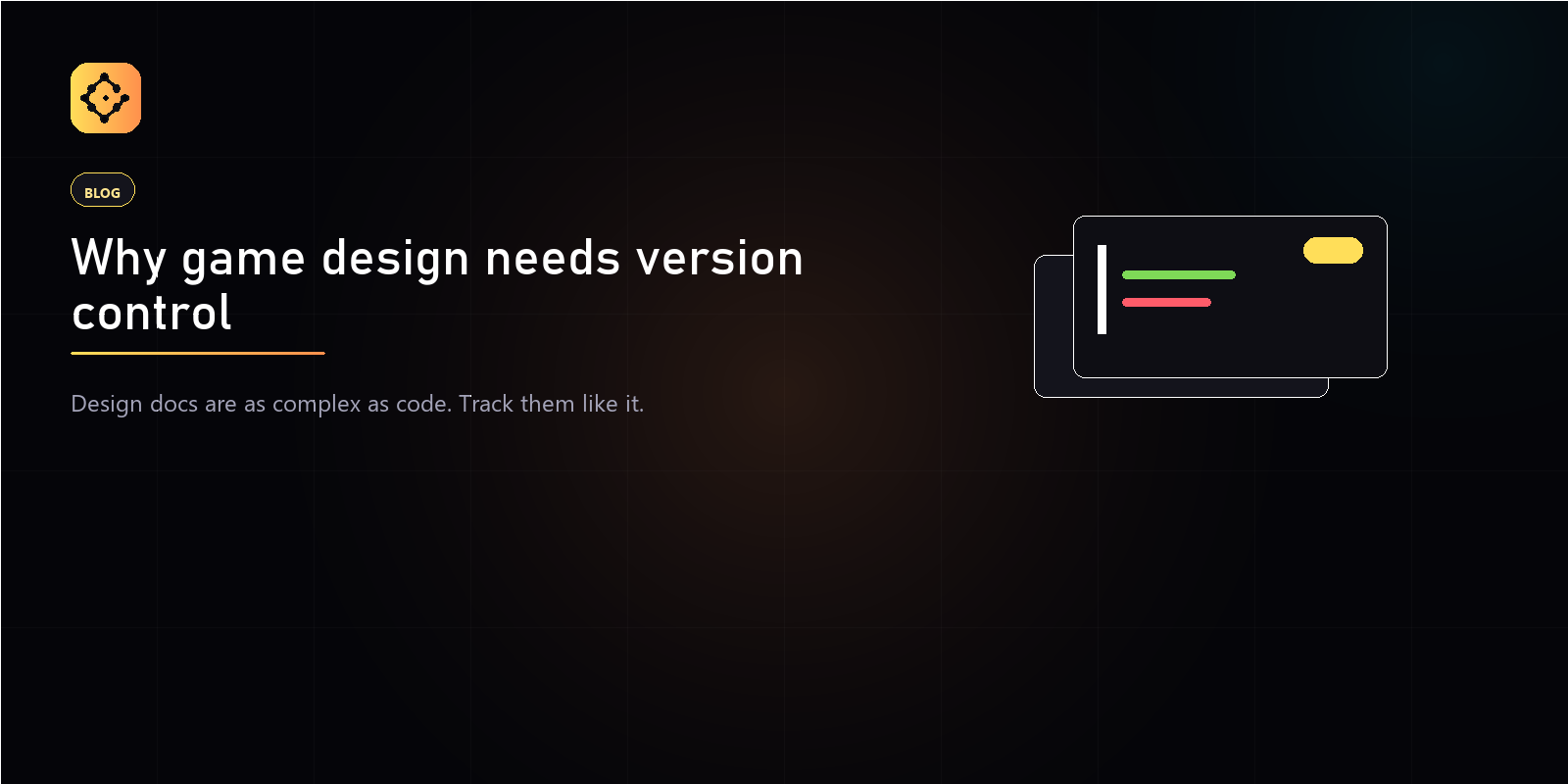
Code has had version control for forty years. Game design documents have had Dropbox folders, Google Docs revision history, and the occasional zipped backup. The result is predictable: design docs drift from implementation, balance spreadsheets fork into half a dozen variants, and narrative arcs diverge from the canonical timeline the team thought they agreed on.
Gameframe treats every design artifact as a versioned object. Every change has an author, a prompt, and a parent. Branching lets a designer prototype a mechanic without polluting the canonical doc. Merging records the decision to ship.
This is the foundation everything else on Gameframe is built on.